
The Complete Process of Currency Exchange in India
By: TradeUCare Team
The process of currency exchange is significant for people traveling to other countries, businesses, and even for people receiving money from other countries.
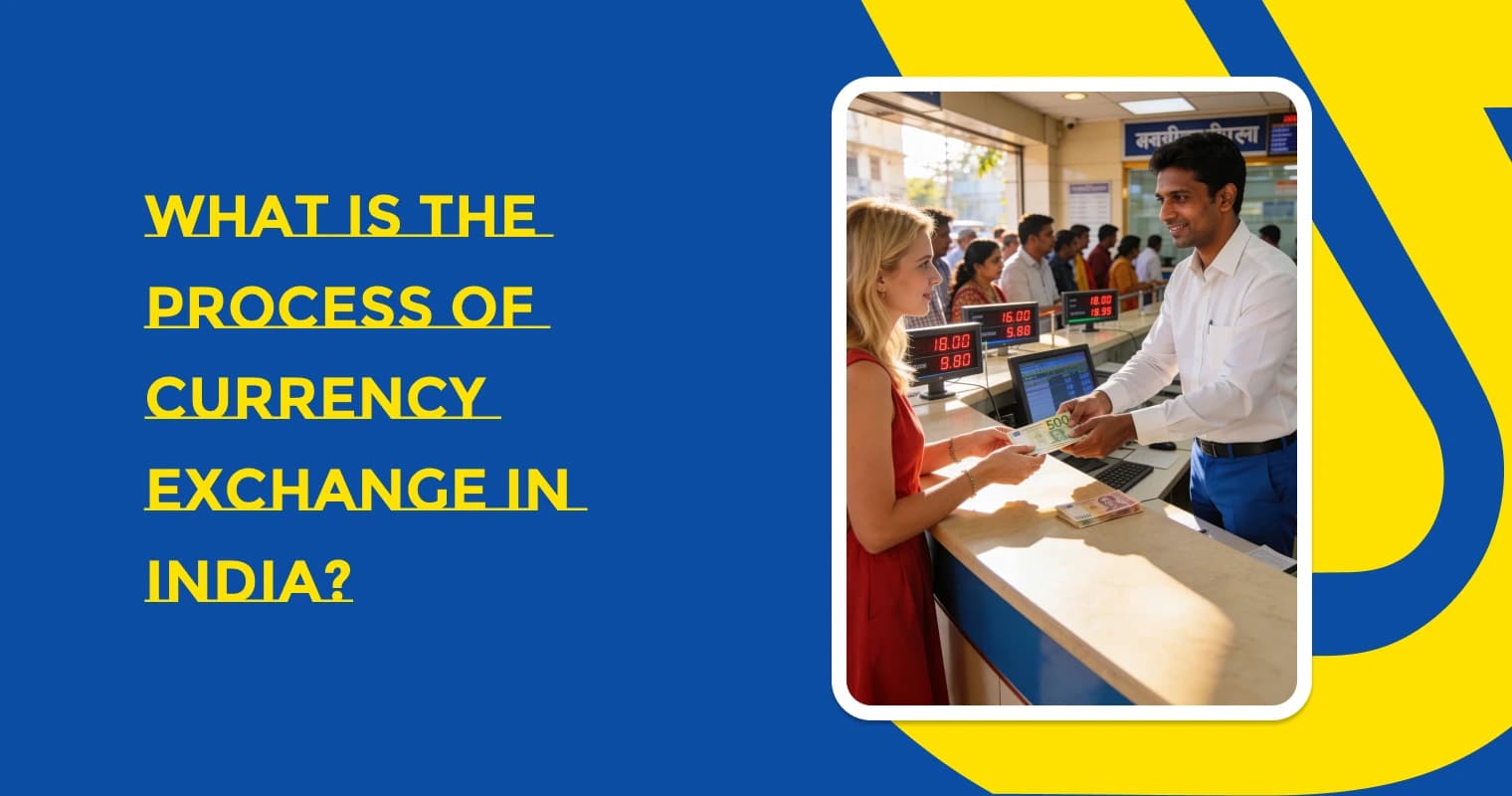
Introduction: Overview of process of currency exchange in India
The process of currency exchange is significant for people traveling to other countries, businesses, and even for people receiving money from other countries. The process of currency exchange involves the conversion of one country's currency to another country's currency through authorised channels.
It is essential to understand the process of currency exchange because, in some cases, the process can directly affect the amount you receive or send. In India, the process of currency exchange is regulated by the Reserve Bank of India (RBI) to ensure transparency and prevent illegal transactions.
If you are planning to visit other countries, studying in other countries, or doing business, you need to understand the complete process of currency exchange.
What is Foreign Currency Exchange in India?
Foreign currency exchange in India refers to the process of exchanging Indian Rupees into another country's currency or exchanging foreign currency into Indian Rupees through financial institutions. The Reserve Bank of India regulates foreign currency exchange in India according to the Foreign Exchange Management Act (FEMA) to ensure transparency and prevent the misuse of foreign exchange transactions.
In India, an individual or a company can exchange foreign currency through banks, dealers, and money changers who are licensed by the Reserve Bank of India. These financial institutions have the permission to buy and sell foreign currency for various purposes, such as traveling, education, medical, import, and receiving foreign remittances.
The rate at which the foreign currency is exchanged in India determines the amount of foreign currency received for exchanging a specific amount of Indian Rupees. The rates are generally determined according to the global foreign exchange market, but the rates might slightly vary due to the service charges applied by the institutions.
Since foreign exchange involves foreign trade, it is mandatory to adhere to the regulations related to documentation, transaction limits, etc.
How Foreign Currency Conversion Works?
Foreign currency conversion is the process of converting one currency into another currency in line with the prevailing exchange rate in the global foreign exchange market. The relative value of one currency in relation to another currency is determined by factors such as the economy, demand and supply in the forex market, and geopolitical conditions.
When you go to a bank or a currency exchange agency to convert your currency, they will provide their own exchange rate for the transaction. The amount of currency that is converted and given to you depends on the prevailing exchange rate at the time of transaction.
It is worthwhile learning some Forex Terms for Beginners in order to understand this process better. The terms include Exchange Rate, Base Currency, Quote Currency, and Forex Spread. For example, if the exchange rate says that 1 USD = ₹83, it means that one US dollar can be converted to 83 rupees.
Generally, currency conversion takes place instantly while transacting in foreign currency while traveling abroad and while converting foreign currency back to rupees after returning from abroad.
Things to Consider Before Exchanging Foreign Currency
Before exchanging your money, you need to understand the rules for currency exchange. At the same time, you need to understand a few factors that can affect your money while exchanging it. Understanding these factors can help you avoid any expenses while exchanging your money.
- Exchange rates can vary across providers: Banks, airports, and other money changers offer different exchange rates. Therefore, you can compare these rates with others to obtain a better deal.
- Service fees and margins: Most money changers charge a service charge while exchanging money. Therefore, you need to understand these charges while exchanging your money.
- Authorised service providers: Exchanging money is only possible through authorised service providers, such as banks or money changers approved by RBI.
- Purpose of the transaction: Exchanging money is possible only if you have a valid purpose, such as traveling, studying, or conducting business, etc.
- Timing of the exchange: Since the exchange rate changes every day according to global market trends, you can benefit while exchanging your money.
Understanding these factors can help you make better decisions while exchanging your money.
Documents Required for Foreign Currency Exchange in India
Prior to exchanging money, banks and money changers in India demand a few documents from the customer, which helps in identifying the customer and also ensures compliance with regulations. These documents required for foreign currency exchange in India may differ slightly from one money changer to another, but the basic documents required for exchanging foreign exchange in India are as follows:
- Passport: Passport is one of the most demanded documents for purchasing foreign exchange for travel purposes, as well as for forex cards.
- Valid visa, wherever applicable: For certain travel-related transactions, a valid visa may also be required.
- Confirmed air ticket or travel proof: For certain travel-related transactions, a valid visa may also be required.
- PAN card: PAN is often required for buying forex as well as issuing a forex card, especially for compliance purposes.
- Application or declaration form: Banks or forex service providers may ask their customers to fill up a signed application or declaration form. RBI allows the release of forex for travel based on a traveller's declaration of forex availed during the financial year.
These documents will enable the authorised service providers to complete KYC, authenticate the purpose of travel, and facilitate the transactions in conformity with the RBI and FEMA regulations.
Types of Currency Exchange Services in India
In India, people can exchange their currencies with other currencies through a variety of approved mechanisms. Each currency exchange service is subject to the regulations of the Reserve Bank of India and the Foreign Exchange Management Act. These exchange mechanisms allow people to exchange Indian Rupees with other currencies for purposes of travel, education, medical treatment, or business, among others.
The most common forms of currency exchange mechanisms include:
- Commercial Banks: Large banks in India offer facilities for exchange of currencies, forex cards, and international remittances. These banks are directly licensed by the RBI for exchange of currencies.
- Full-Fledged Money Changers (FFMCs): The RBI licenses certain companies as Full-Fledged Money Changers, allowing them to buy and sell foreign currency notes and traveler's cheques. These money changers are usually located in tourist areas, business areas, and other commercial areas.
- Online Forex Platforms and Authorised Forex Companies: There are a number of authorised Forex companies that have started offering online booking for currency exchange, Forex cards, and remittance services. Customers can lock in the exchange rate online and collect the currency from authorised centers or have it delivered.
- Airport currency exchange counters: Many airports in India have currency exchange counters that help customers exchange their currency before leaving or even after arriving in the country. This is convenient for customers, but sometimes the rate may be slightly higher due to service charges.
These are the different services that help customers exchange their currency as per their convenience.
Step-by-Step Process of Currency Exchange in India
The exchange of currency in India is a regulated activity, and it is managed by the Reserve Bank of India (RBI) under the Foreign Exchange Management Act (FEMA). The procedure to exchange foreign currency in India is more or less similar for everyone, with a few basic steps involved in the process.
Step 1: Choose an authorised forex provider
The first step is to locate an authorised exchange provider, which can be a bank, a Full-Fledged Money Changer (FFMC), or a licensed forex exchange provider. This is a must, as exchange of foreign currency in India is regulated by the Reserve Bank of India, and it is mandatory for any exchange of foreign currency to be done through an authorised exchange provider.
Step 2: Check the exchange rate
The exchange rates may vary slightly from one exchange provider to another depending on the fees charged by the exchange providers. Therefore, it is always a good idea to compare exchange rates before making a transaction.
Step 3: Submit the required documents
While purchasing foreign currency for travel, one needs to submit documents such as a passport, PAN card, visa, and a travel ticket.
Step 4: Fill out the declaration or application form
You may also have to fill out a declaration form (Form A2), specifying the purpose of the forex transaction. This is done to ensure that the exchange complies with the regulatory requirements.
Step 5: Complete payment and receive currency
After the verification of the documents, the payment is made by the customer in cash, by bank transfer, or by card. The authorised dealer then issues the converted foreign currency, forex card, or the remittance as per the transaction type.
Step 6: Maintain records of the transaction
The authorised dealers are also required to maintain the records of the transactions for the purpose of compliance.
By following these steps, you can ensure that your currency exchange transaction is secure, compliant, and documented correctly.
Best Ways to Exchange Currency in India
The best way to exchange foreign currency in India is neither necessarily the quickest nor the nearest, as this largely depends on the exchange rate, the total amount of charges, and the RBI authorisation status of the service provider. RBI allows residents of India to purchase foreign exchange from authorised persons, like AD Category I banks, AD Category II, and Full-Fledged Money Changers, for permitted purposes like private or business travel.
A very effective strategy for the exchange of money can be achieved in the following ways:
- Compare the final rate, not just the displayed rate: It is important to compare the final exchange rate, as the exchange rate may be attractive, but there may be a service fee involved in the exchange process. The exchange tools on the Wise website are based on the idea of comparing the exchange rates with the final amount that needs to be paid out.
- Use authorised dealers instead of informal sellers: RBI permits only authorised money changers to exchange money, so using them is a safer option compared to street money changers.
- Use online booking when rates are favorable: When the rates are right, you can book your forex online with certain regulated providers, which offer the facility of picking up your forex from the store or getting it delivered home.
- Avoid airport counters unless it is urgent: While airport counters are the most convenient, they are not always the best option as they are not the cheapest. It's because of this reason that one compares the rates beforehand.
In the end, the best currency exchange service is the one that is transparent in its rates, operates legally, and suits your needs in the form you want – be it cash, a forex card, or an online booking.
Limits and Rules for Currency Exchange in India
Currency exchange transactions in India are governed by the Reserve Bank of India (RBI) under the Foreign Exchange Management Act (FEMA). These RBI rules for foreign currency exchange are framed to ensure that all foreign exchange transactions are conducted in a legitimate manner and only for legitimate purposes such as traveling, studying, undergoing treatment, or making business transactions.
Some of the key rules for currency exchange include:
- Foreign exchange limits under the Liberalised Remittance Scheme (LRS): Residents of India can remit or exchange foreign exchange for up to USD 250,000 per financial year under the Liberalised Remittance Scheme for legitimate purposes such as traveling, studying, undergoing treatment, etc. This is one of the rules related to foreign currency exchange limit in India, which is applicable to individuals.
- Purchase limits for travel purposes: Foreign exchange is allowed to be carried by travelers in the form of currency, forex, or traveler's cheques up to certain limits prescribed by RBI depending upon the purpose and destination of visit.
- Transactions must be done through authorised dealers: Currency exchange has to be carried out through authorised banks, authorised dealers, or licensed money changers approved by the RBI.
- Purpose declaration may be required: Declaration of purpose may also be required while purchasing foreign currency to ensure compliance of RBI Forex Rules for Indian Residents.
Compliance of these regulatory guidelines ensures that foreign currency transactions are compliant, secure, as well as transparent.
Common Mistakes to Avoid in Currency Exchange
Although the process may seem simple, making a wrong move may result in unnecessary costs or time wasted. Understanding common errors may help an individual make better decisions and get the most out of the transaction.
- Not comparing exchange rates: Some people may exchange their money at the first available counter without making any comparisons. The rates may vary across banks, forex centers, and even airports.
- Ignoring hidden fees or service charges: Some centers may add service charges or extra margins to the exchange rate.
- Exchanging currency at the last minute: Exchanging currencies at airports can sometimes prove to be costly due to high operating expenses. Exchanging currencies at an earlier point can help avoid this mistake.
- Using unauthorised forex dealers: Exchanging currencies through unauthorised dealers can often prove to be risky and violate regulatory guidelines. It is advisable to use only those dealers who are licensed by the RBI.
- Not keeping transaction records: Keeping records of transactions is important, especially if it is a high-value transaction.
Avoiding such mistakes can help individuals as well as businesses conduct currency exchange transactions more effectively.
Why Choose TradeUCare for Authorised Currency Exchange Services
TradeUCare is committed to making foreign exchange transactions simpler, faster, and more transparent for its customers. The company's website is also highlighting a digital-first experience and transparency in foreign exchange and remittance services.
Some reasons why customers may consider TradeUCare include:
- Transparent and customer-focused services: TradeUCare provides a straightforward and transparent experience for its customers in foreign exchange and remittance services.
- Focus on speed, transparency, and reliability: TradeUCare is clearly stating that its main goal is to provide a simple and hassle-free experience for international money transfers and foreign exchange.
- Digital-first customer experience: TradeUCare is highlighting a digital-first forex experience on its website, which may be a convenient option for users seeking a seamless experience in foreign exchange and remittance services.
- Structured compliance and documentation process: TradeUCare's AML policy indicates that they have a robust compliance process in place. This includes KYC checks, transaction monitoring, sanctions screening, and support for online submission of Form A2 within specified limits.
- Practical support for forex and remittance needs: Based on the messaging on their website, TradeUCare seems to be an option for those who are looking for a provider that can support their requirements for currency exchange and remittance in a secure manner through a structured and regulated process.
Overall, TradeUCare seems to be a good option for those who are looking for a transparent and compliant provider and are committed to delivering the best currency exchange service through their platform based on the values of trust, speed, and ease of use.
Conclusion
The entire process of currency exchange is important for people and businesses to understand so that they are comfortable with the exchange. With the knowledge of the exchange rates and the documentation process, people can avoid unnecessary delays and costs.
For people who are traveling abroad for studies or businesses, the entire process of exchange with the help of a reliable and transparent service provider can make the entire exchange process easier.
FAQs
Residents in India can exchange foreign currency as per the RBI guidelines, which is up to USD 250,000 per financial year under the Liberalised Remittance Scheme.
Search
Categories
- Currency Exchange4
- Travel Tips5
- Money Transfer3
- Forex Trading1
- RBI Guidelines1